
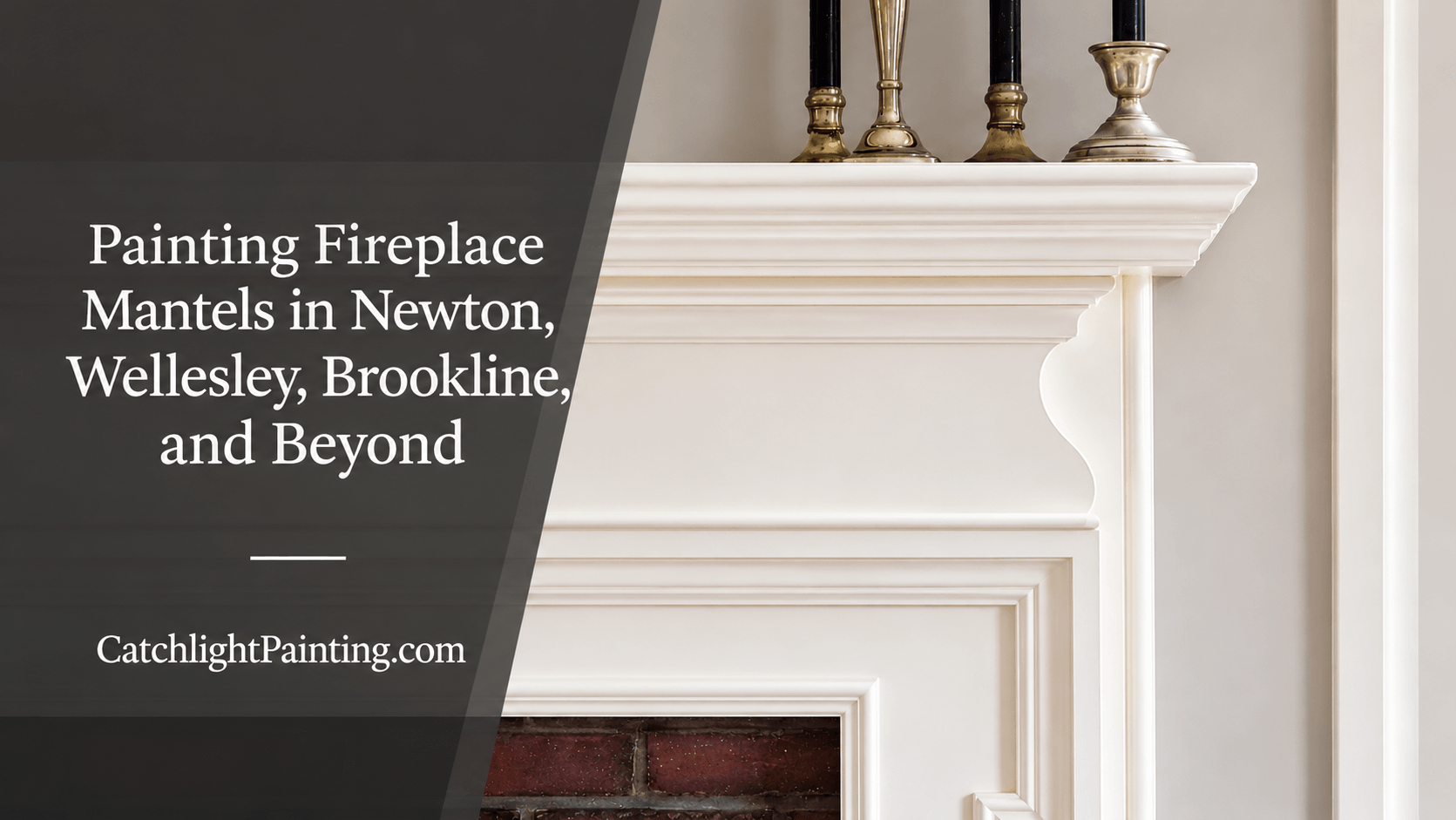
There is something particularly old-world-satisfying about the fireplace mantels found in older homes throughout Newton, Wellesley, and Brookline. Some are relatively simple, with traditional moldings and clean proportions. Others are more elaborate, with decorative columns and intricate woodwork that reflects another era’s craftsmanship.
In Colonial Revival homes, these features were designed to be a core part of the room. While many have survived for a century or more, they haven’t necessarily remained untouched. Years of repainting and changing tastes can gradually alter the details that made them special in the first place. Sometimes a fresh coat of paint is exactly what a mantel needs. Other times, it’s worth looking more closely at what’s already there before deciding what to do next.
The Details That Make Colonial Revival Mantels Distinctive
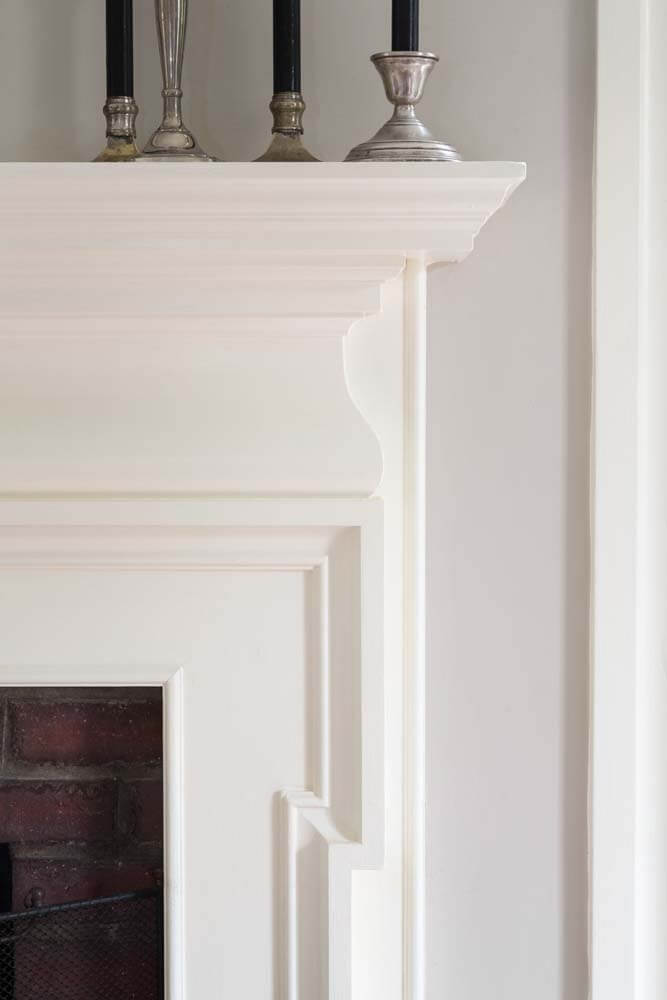
Colonial Revival architecture gained popularity throughout New England in the late 19th and early 20th centuries; symmetry, classical proportions, and carefully crafted interior woodwork defined the style. Fireplace mantels had these influences too; they were built with decorative pilasters and moldings – details you really don’t find today with more minimalist design agendas.
These features remain in historic homes throughout Greater Boston, although their condition can vary considerably. Some have been carefully maintained over generations, while others have accumulated enough paint to make the original craftsmanship, well, nearly invisible.
What’s Beneath the Paint?
One challenge of painting Colonial Revival mantels is dealing with everything the woodwork has endured over the years. Multiple layers of paint can gradually soften molding profiles, fill grooves, and obscure details. What once had sharp, defined edges may eventually look rounded or uneven.
Removing that buildup isn’t always straightforward. Aggressive sanding can damage delicate profiles, and stripping an entire mantel may be unnecessary if the existing finish remains sound.
At Catchlight, our approach to historic home restoration always begins with understanding the condition of the original materials. Sometimes that means carefully removing failing paint. Sometimes it involves repairing damaged sections or preparing existing finishes without disturbing the wood beneath.
When Is Repainting the Right Choice?
Not every older fireplace mantel needs to be stripped down to bare wood. Some Colonial Revival mantels were originally intended to be painted, while others have natural wood finishes that were covered during later renovations.
We always consider which approach makes sense for the project. A mantel with sound paint and well-preserved details may just need some careful preparation and refinishing. One with heavy paint buildup, deteriorating surfaces, or a decaying natural finish may need a more involved approach. Even then, exposing the wood isn’t automatically the better choice. Some original mantels were built from different wood species because they were always intended to be painted.
Painting historic interior woodwork requires detective work and an understanding of the design era to do it right and not defile something that’s lasted multiple centuries.
Choosing a Color That Belongs in the Room
Traditional whites and creams remain popular choices for Colonial Revival mantels and often work beautifully with the surrounding architecture, but other approaches are possible. Deeper greens, muted blues, charcoal, and warm grays can give a fireplace more presence without disconnecting it from the rest of the room.
Preserving What Makes the Home Special
One of the pleasures of working with older homes throughout Greater Boston is discovering how much individual character remains in their interiors. A Colonial Revival mantel in Wellesley may share influences with one in Newton or Brookline, but its materials and history can be entirely different.
Whether you’re considering repainting an original fireplace mantel or refreshing other architectural woodwork, contact Catchlight Painting.
We value our reputation as experienced, uncompromising historic house painters in Wellesley, Newton, and Brookline, and we’d love to hear about your next project.